



OpenAI to shut down ChatGPT Atlas browser less than a year after its launch
OpenAI had launched its desktop browser, ChatGPT Atlas, on October 21st, 2025. Less than a year after its release, the company has announced that it will be sunsetting the browser. When it was released, OpenAI touted Atlas as the browser that could do tasks on the user’s behalf, aka an agentic AI that could automate tasks based on the user’s prompt. This week, during the ChatGPT Work announcement, OpenAI revealed that ChatGPT Atlas is shutting down on August 9th, 2026.

But this doesn’t mean that OpenAI is giving up on its browser. The decision to discontinue the browser is part of OpenAI’s efforts to simplify its desktop user experience. OpenAI is said to be prepping a “Superapp” which will combine the functionalities of Atlas browser, the Codex coding tool, and the ChatGPT app, into a single app.
The Verge reports that OpenAI’s competition with bitter rival Anthropic played a key role in the decision to re-focus its efforts. OpenAI wants to catch up with Anthropic’s work on Claude, which has added several productivity features. Can OpenAI’s Superapp turn the tide in its favor?
ChatGPT’s voice mode gets some major improvements
OpenAI announced ChatGPT Live, an upgrade to the voice mode of the AI service. The previous voice model used a turn-based system to provide responses, this affected its ability to maintain a conversational flow, and the accuracy of its answers. The new models are built on a full-duplex architecture, capable of processing input and output simultaneously.
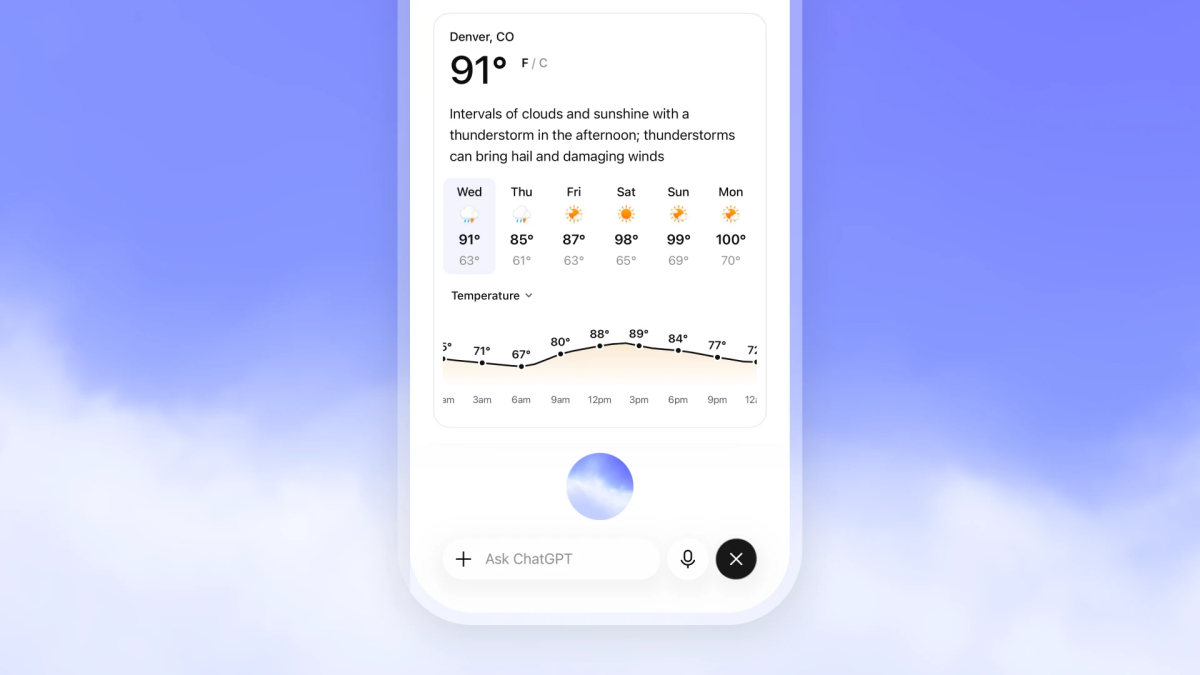
The company says it is its smartest voice model. GPT-Live is designed to enhance the voice experience, by listening to users and staying quiet when the user talks. It will also engage with the user with phrases like “mhmm” or “yeah”, to show that it’s paying attention to them. Users can use GPT-Live for various tasks including search, memory, images, and file uploads. GPT-Live will use GPT-5.5 in the background, for fetching answers from the web to generate a reply. The voice mode will now display visual answers for certain topics such as weather, stocks, sports.
GPT-Live is rolling out to users on Android, iOS and the web. Free users will have access to GPT-Live-1-mini, while GPT-Live-1 will be the new default voice model for ChatGPT Go, Plus and Pro subscribers.
DuckDuckGo browser can now block YouTube ads
DuckDuckGo’s browser has been around for a few years, and while it had a built-in ad blocker, the feature was far from perfect, especially when it came to blocking ads on YouTube. That changed this week, as the search engine provider released an updated version of its browser, with the ability to block YouTube ads.

This shouldn’t be confused with Duck Player, which has existed in the browser and lets users watch videos directly on the search results page, without being tracked by cookies or personalized ads. The YouTube ad blocker in DuckDuckGo browser is different, it blocks ads that appear in videos on YouTube’s website. In order to make ad blocking possible, DuckDuckGo uses filter lists that have been sourced from the open-source extension, uBlock Origin.
YouTube ad blocking is enabled by default on DuckDuckGo browser for Windows, macOS and iPhone, so users can watch videos without ads on YouTube’s website. The ad blocker will be automatically enabled on Android soon, but users can can manage the ad blocking experience from the Settings > Ad Blocking section. Alternatively, if you wish to disable ads for some reason, you can tap on the menu and disable YouTube Ad Blocking on mobile. Desktop users can do the same by clicking the video icon next to the shield icon on the address bar. DuckDuckGo says that the ad blocker could result in additional buffering times, and that it is normal. Things could improve in the future, when DuckDuckGo adds its own rules and filter lists.
Android backups now count towards Google Account storage
Google has made a small change to its policy regarding Android backups, specifically about the data that counts towards the Google account storage. Normally, Android backups considered media, i.e. photos and videos that were uploaded to Google Photos and MMS Data. These would be counted as part of the 15GB free storage space that every personal Google account is eligible for. Now, Google says Android backups will include all data that is synced to the cloud, including SMS messages, call history and device settings. Users can toggle the data types that are included in Android backups, which allows for more granular controls. For e.g. if a user wants their MMS messages, Call history, and Device settings to be backed up to the cloud, they can enable all three, or disable one or more types as required.
Some users are worried about this change, but in reality, the policy change only increases the account’s data storage by around 40 MB. While 40 megabytes may sound like a trivial amount, it makes a lot more sense if you consider billions of user accounts. That’s a lot of storage. The new rule has come into effect, as of July 7, 2026, but the toggles for the new data types are still rolling out to users.
Meta could be fined by the EU because of Instagram and Facebook’s addictive features
The European Commission has published its preliminary findings from its investigation of Meta’s services. The EU has accused the U.S company of breaching the Digital Services Act, by designing Instagram and Facebook to be addictive. Specifically, it found features such as infinite scroll, autoplay, push notifications, and highly personalized recommender systems to be problematic. The EU says that Meta failed to assess the risks of the addictive design on the well being of users. According to the report, the social networking services constantly show users new content, which in turn fuels the user’s urge to keep scrolling. These features affect the mental health by putting the brain into autopilot mode, thus creating unhealthy habits and compulsive usage. It warned that this could also affect the physical health of users.

The EU was particularly critical of Meta’s disregard about the time that minors spend on Facebook or Instagram at night watching reels and stories. It said that the time management tools in both apps, which are activated by default for teens, can easily be dismissed, and do not offer a meaningful reduction or control of the usage. The Commission also noted that the parental controls offered by Meta are only effective if a parent or guardian was tech-savvy, and that it required time and effort to understand the options.
Meta has the right to review the report, and reply to the Commission’s findings. But, if it is found guilty of breaching the law, the Commission may issue a non-compliance decision, along with a hefty fine, i.e. 6% of the company’s worldwide annual turnover. It is likely that Meta will have to redesign Instagram and Facebook in a non-addictive way, and also educate users about prolonged usage of the services.